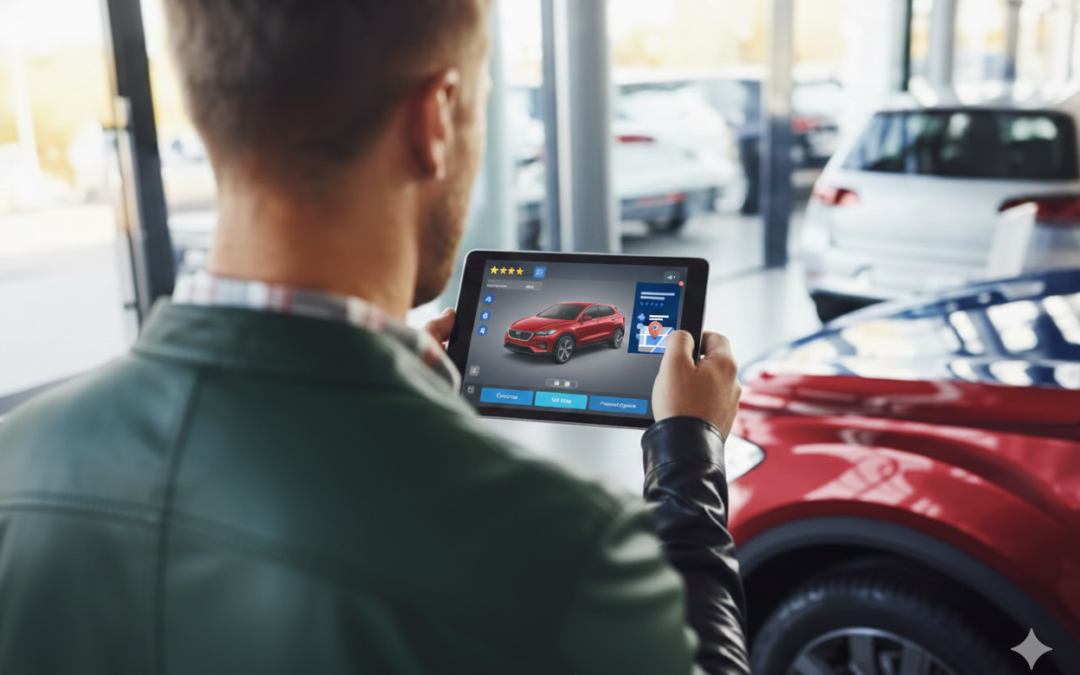
If you’re an automotive marketing leader, you’ve probably felt it already: the car buyer has changed, and the old digital playbook isn’t working like it used to.
You might still be getting website traffic. You might still be running paid ads. You might even be seeing leads come in. But here’s the uncomfortable question:
Are those leads actually turning into showroom visits and sales—or just filling your CRM with noise?
Today’s buyer is more informed, more impatient, and more skeptical than ever. They don’t want to “be sold.” They want to feel confident. They want to stay in control. And they want to move at their speed—not yours.
Think about it like this:
Modern car buyers don’t shop like they’re walking into a dealership anymore. They shop like they’re choosing a Netflix show. They scroll, compare, skip, and decide in seconds.
That’s why marketing leaders must rethink how they attract, engage, and convert customers—because Digital Strategies for the Modern Car Buyer aren’t optional anymore. They’re the new baseline.
Digital Strategies for the Modern Car Buyer
The Modern Car Buyer Has Changed (And Fast)
Let’s start with the obvious truth: buyers have more power than ever.
They can compare models, pricing, reviews, trims, and financing options without speaking to a single person. And honestly? Many of them prefer it that way.
Today’s car buyer:
Researches online first
Compares multiple dealerships instantly
Wants transparency
Avoids pressure
Expects fast responses
Switches brands quickly if the experience feels “off”
Here’s the real shift:
People don’t just buy a car. They buy a buying experience.
And if your digital presence feels outdated, confusing, or slow, they’ll leave—without telling you why.
Why Traditional Digital Marketing Is Losing Impact
If you’re still using the same strategies from 5–10 years ago, you may be doing a lot of work… for fewer results.
The problem isn’t that digital marketing doesn’t work. It’s that buyers have adapted, and many dealership strategies haven’t.
Traditional strategies that are losing impact include:
Generic “Big Sale This Weekend!” messaging
Landing pages with little real information
Forms that ask for too much too soon
Follow-ups that feel robotic
Ads that lead to a confusing website experience
Let’s be honest—when buyers feel like they’re being pushed, they pull away.
So the big question becomes:
How do you market in a way that helps buyers instead of chasing them?
Digital Strategies for the Modern Car Buyer: What It Really Means
When we say Digital Strategies for the Modern Car Buyer, we’re not talking about just running Facebook ads and calling it a day.
We’re talking about building a system that matches how people actually shop today.
Modern digital strategy means:
Meeting buyers at the research stage
Making your dealership easy to trust
Removing friction from the next step
Staying consistent across every channel
Responding quickly and personally
In other words, your digital strategy should feel like a helpful guide—not a loud salesperson.
Key point:
The goal is not more leads. The goal is better buyers.
Trust Is the New Currency in Automotive Marketing
You can have the best pricing in town, but if buyers don’t trust you, they won’t show up.
Trust is built online through small moments:
Clear pricing
Honest messaging
Helpful content
Real photos and videos
Reviews and reputation
Transparent next steps
Ask yourself this:
If you were shopping on your own website, would you feel confident… or cautious?
Modern buyers are trained to spot “too good to be true” marketing. So instead of trying to sound perfect, aim to sound real.
Trust-building digital assets include:
Payment estimators
Trade-in tools
Clear “what’s included” explanations
Financing education
Service and warranty transparency
Trust isn’t a nice-to-have anymore.
It’s the reason people choose you.
Your Website Must Work Like a Salesperson (Without Pressure)
Your website is no longer a brochure. It’s your best salesperson.
But here’s the catch:
It has to sell without feeling salesy.
Your website should answer the questions buyers are already thinking:
“Is this vehicle really available?”
“What will my payment look like?”
“How much is my trade worth?”
“Can I get pre-approved?”
“How quickly will someone respond?”
What modern buyers want from your website:
Fast loading speed
Mobile-first design
Simple navigation
Easy inventory filtering
Real photos (not just stock images)
Clear CTAs like “Check Availability” or “Get Today’s Price”
Bold takeaway:
A great website reduces buyer anxiety. A weak one increases it.
Search Behavior Is the New “Walk-In Traffic”
In the past, your best opportunity was a walk-in.
Today?
Your best opportunity is when someone searches online.
Think about how buyers search:
“Best SUV under 40k”
“2026 [model] lease deals”
“Used trucks near me”
“Honda vs Toyota reliability”
“Dealership with good reviews near me”
If your dealership isn’t showing up—or your content doesn’t help—you’re invisible.
Smart SEO strategy includes:
Location-based inventory pages
Model research pages
Financing and trade-in guides
Service pages that rank locally
Google Business Profile optimization
SEO isn’t just a marketing tactic.
It’s digital foot traffic.
Video Isn’t Optional—It’s the New Test Drive
Want to know what builds confidence fast?
Video.
Because video gives buyers something photos can’t: a feeling.
It shows:
Vehicle condition
Interior details
Features in action
Dealership professionalism
Transparency
Even simple walkaround videos can make a huge difference. Why?
Because buyers don’t trust words as much as they trust what they can see.
Video ideas that work well:
Quick vehicle walkarounds
“3 reasons people love this model”
Feature demos (Apple CarPlay, safety tech, etc.)
Trade-in and financing explainers
Meet-the-team clips
Metaphor time:
If your digital strategy is the road, video is the headlights. Without it, buyers feel like they’re driving in the dark.
Personalization Wins: Stop Marketing to “Everyone”
If your marketing speaks to everyone, it speaks to no one.
Modern buyers expect personalization because that’s what they get everywhere else—Amazon, Netflix, even food delivery apps.
So why would car marketing stay generic?
Personalization can look like:
Different messaging for new vs used buyers
Ads based on model interest
Email follow-ups based on browsing behavior
Landing pages tailored to the buyer’s stage
Even small changes matter.
Instead of:
“Shop our inventory today!”
Try:
“Still comparing SUVs? Here are the top 3 features buyers love in this model.”
That feels helpful. And helpful converts.
Social Proof Matters More Than Your Ad Copy
Your dealership can say you’re the best.
But buyers want to hear it from someone else.
That’s why social proof is a conversion weapon.
Examples of social proof that influence decisions:
Google reviews
Facebook recommendations
Video testimonials
Before-and-after delivery photos
Community involvement posts
Even better? Use reviews strategically:
On landing pages
On model pages
In retargeting ads
In email campaigns
Key point:
Your reputation is part of your digital strategy. Not separate from it.
Paid Ads Still Work—But Only With Smarter Strategy
Paid ads are still powerful—but the “set it and forget it” approach is expensive now.
Modern paid strategy is about:
Better targeting
Better creative
Better landing pages
Better follow-up
What marketing leaders should rethink in paid campaigns:
Are your ads matching buyer intent?
Are you promoting value or just discounts?
Are you retargeting smartly?
Are your forms too long?
Are leads being contacted quickly?
Also, don’t rely on one platform.
A strong mix often includes:
Google Search for high intent
Meta (Facebook/Instagram) for discovery + retargeting
YouTube for awareness and trust-building
Bold takeaway:
Paid ads don’t fail because of budget. They fail because of experience.
Speed to Lead: The Dealership Advantage Most Waste
You can spend thousands generating leads…
…but if your response time is slow, you’re donating money to competitors.
Modern buyers expect fast answers. Like, really fast.
If your dealership responds in:
5 minutes → you’re competitive
30 minutes → you’re behind
24 hours → you’re forgotten
Speed matters because buyers don’t submit one lead. They submit several.
How to win with speed:
Automated first response (that feels human)
Text message follow-up
Clear next step options
Real-time scheduling links
Key point:
Fast follow-up feels professional. Slow follow-up feels like you don’t care.
Omnichannel Consistency: Buyers Notice the Gaps
Ever had this happen?
Your ad says one thing.
Your website says another.
Your salesperson says something different.
That inconsistency creates doubt.
Modern buyers move across channels quickly:
Google search → website
website → social media
social media → reviews
reviews → lead form
lead form → phone call
Your job is to make the journey feel seamless.
Consistency must include:
Offers and incentives
Pricing messaging
Inventory availability
Brand voice and tone
Visual style (photos, video, design)
Bold takeaway:
Confusion kills confidence. Confidence creates sales.
Data + Tracking: What Marketing Leaders Must Measure Now
If you can’t measure it, you can’t improve it.
But here’s the problem: many dealerships track the wrong things.
Clicks and impressions are fine—but they don’t tell the full story.
Modern KPIs marketing leaders should track:
Cost per appointment (not just cost per lead)
Lead-to-show rate
Show-to-close rate
Response time by channel
VDP engagement and time on site
Call quality and outcomes
Also, don’t ignore attribution.
You need to know:
Which campaigns bring quality buyers
Which sources waste budget
Which landing pages convert best
Key point:
The best strategy isn’t the one that gets attention—it’s the one that drives action.
How to Align Marketing and Sales for Better Conversions
Marketing can generate leads all day.
But if sales doesn’t follow up correctly, the system breaks.
This is where many dealerships struggle—because marketing and sales operate like separate islands.
To fix that, align on:
Lead handling expectations
Response time standards
Messaging consistency
Follow-up scripts and tone
Appointment-setting process
Ask your team:
Are we treating digital leads like real people—or like “internet forms”?
Because buyers can feel the difference.
Bold takeaway:
Your digital strategy is only as strong as your follow-up process.
Your Next 90-Day Action Plan to Modernize Digital Strategy
If you’re thinking, “Okay, this makes sense… but where do I start?”—you’re not alone.
Here’s a simple 90-day plan to build momentum without overwhelm.
Days 1–30: Fix the Foundation
Focus on trust + usability
Improve website speed and mobile experience
Update CTAs to be clearer and less pushy
Add reviews/testimonials across key pages
Ensure inventory is accurate and updated
Audit your lead forms (shorter is better)
Days 31–60: Build Buyer-Friendly Content
Focus on visibility + confidence
Create model comparison content
Publish financing and trade-in guides
Start a weekly short-form video routine
Improve local SEO pages and Google Business Profile
Launch retargeting ads with helpful messaging
Days 61–90: Optimize Conversions
Focus on leads that turn into sales
Improve speed-to-lead process
Add text + scheduling options
Track cost per appointment
Review call recordings and lead outcomes
Align marketing and sales on messaging
Bold final takeaway:
Digital Strategies for the Modern Car Buyer aren’t about doing more—they’re about doing what matters.
Conclusion
The modern car buyer isn’t harder to reach—they’re just harder to impress.
They want transparency, speed, and confidence. They want to research on their terms and take the next step when they’re ready. And they’ll choose the dealership that makes the journey feel simple and trustworthy.
So if your digital strategy still looks like it did a few years ago, now is the time to evolve. Because the dealerships that win today aren’t the loudest.
They’re the most helpful.
And when you commit to Digital Strategies for the Modern Car Buyer, you’re not just improving marketing—you’re building a buying experience people actually enjoy.
Recent Comments